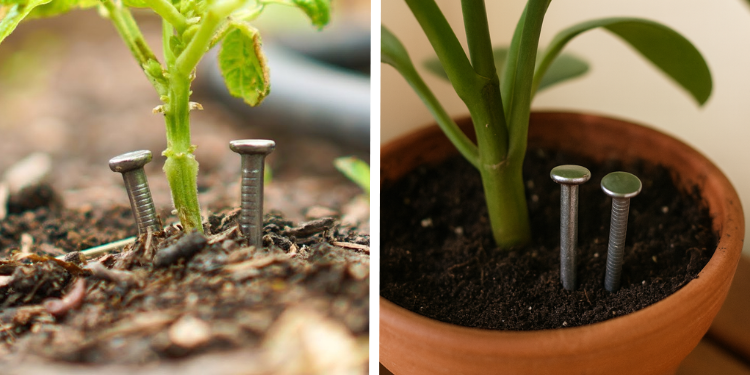
Common Mistakes to Avoid
Although safe, this hack can backfire if done incorrectly. Here’s what to watch for:
1. Using coated or galvanized nails: These contain zinc or chemicals that can harm your plant or leach into the soil.
2. Overcrowding with too many nails: Excessive iron can slightly acidify the soil and stress roots. Two nails are plenty for small or medium pots.
3. Using nails too close to the roots: Keep a few inches of distance from the main stem to prevent direct root contact with rusting metal.
4. Expecting overnight results: The process takes time – but that’s the beauty of it. It’s slow, natural, and safe.
The Chemistry: How Rust Helps Plants
When iron rusts (Fe → Fe₂O₃), it forms iron oxide – a mineral compound that slowly dissolves into the soil as Fe²⁺ ions, the same form plants absorb through their roots.
These ions help:
- Build chlorophyll molecules
- Activate plant enzymes
- Promote energy transfer during photosynthesis
This mild rusting process actually mimics natural mineral weathering, the same way iron-rich rocks nourish soil in forests and fields.
So, in essence, your nails are replicating nature’s own mineral-replenishing cycle – right inside your pot.
A Note on Soil pH
Iron absorption is closely linked to soil acidity.
If your soil is too alkaline (high pH), plants struggle to take up iron even if it’s available.
If you use tap water rich in minerals or lime, your soil may gradually become alkaline.
Using rusty nails can gently rebalance soil pH over time, keeping it in the slightly acidic range (6.0–6.5) that most houseplants prefer.
To monitor this, you can test soil pH occasionally using a simple home kit – ensuring conditions stay optimal for nutrient absorption.
Can You Use Nails for Outdoor Plants Too?
Absolutely. This trick works beautifully for both garden beds and container plants.
For outdoor use:
- Push several nails into the soil near the root zone (but not touching roots).
- Water regularly to activate oxidation.
- Replace every 6–12 months, depending on climate and moisture.
It’s especially effective for roses, hydrangeas, tomatoes, and peppers, which are heavy feeders and often show iron deficiency through yellow leaves with green veins.
Placing two plain nails beside your potted plants may sound too simple to make a difference – but it’s a timeless example of how nature responds to balance and patience.