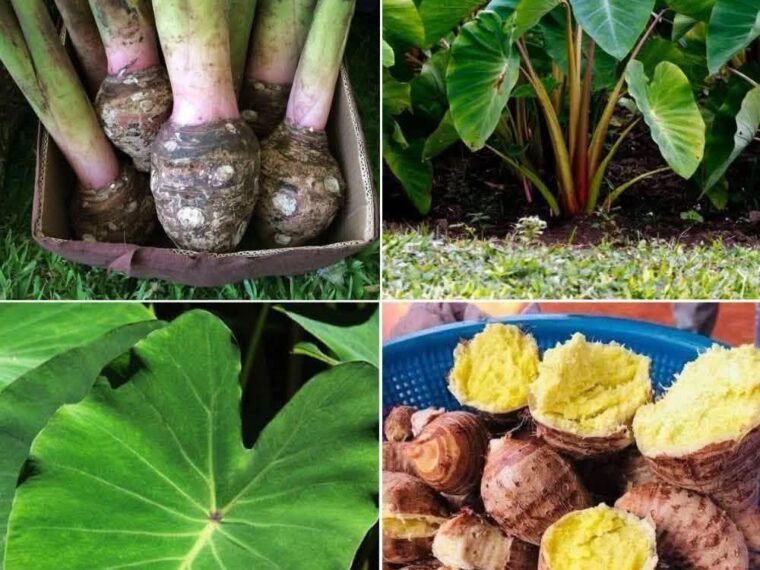
🥣 3. Culinary Uses: Delicious and Versatile
Taro root can be:
- boiled
- steamed
- mashed
- used in soups and stews
- turned into chips
- baked into desserts and pastries
- added to smoothies (cooked)
- made into taro milk tea
Its naturally creamy texture makes it a favorite in both sweet and savory dishes.
Taro leaves are used in dishes like:
- Laing (Philippines)
- Lu’au (Hawaii)
- Palusami (Samoa)
- African stews and sauces
Cooked with coconut milk, spices, or broth, they transform into a deliciously rich, velvety dish.
🌏 4. Cultural Significance: A Sacred Plant
In many cultures, taro is more than food — it symbolizes:
- Life
- Family
- Abundance
- Strength
- Tradition
In Hawaii, taro (kalo) is considered an ancestral plant. In West Africa, it has been a survival crop for centuries. And in Asia, it is celebrated in festivals, rituals, and cuisine.
Taro connects people to the land, their ancestors, and their heritage.
🧠 5. Taro for Modern Wellness
With rising interest in clean eating and natural foods, taro has become a go-to ingredient for:
✔ gluten-free diets
✔ gut health routines
✔ plant-based nutrition
✔ anti-inflammatory eating
✔ whole-food meals
It offers steady energy, supports digestion, and nourishes the body gently — making it ideal for everyday wellness.
🌟 Conclusion: The Power of Taro Root and Beyond
Taro (Colocasia esculenta) isn’t just a root vegetable — it’s a powerhouse of nutrition, culture, and healing. From its fiber-rich root that supports gut and heart health, to its antioxidant-packed leaves that boost immunity and nourish the body, taro is truly a plant that gives beyond expectations.
Whether enjoyed in comforting dishes or used as part of a balanced wellness lifestyle, taro remains one of nature’s most valuable and versatile plants