7. Seedlings
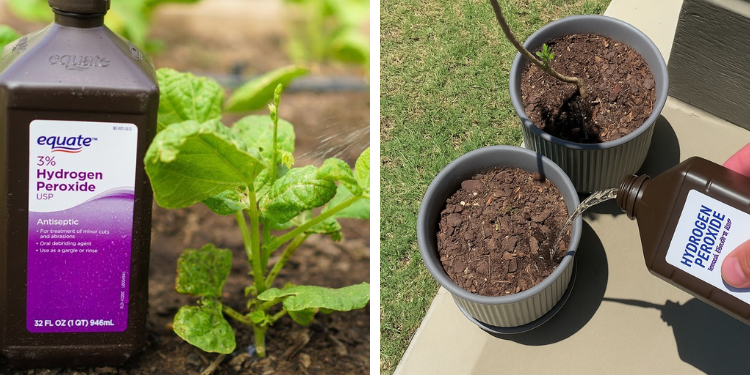
Why They Love It: Young seedlings are especially vulnerable to damping-off disease, which causes sudden collapse due to soil fungi.
Hydrogen peroxide prevents fungal spores from taking hold and oxygenates the tiny roots.
How to Use:
- Sterilize seed-starting trays with 3% hydrogen peroxide before planting.
- Water seedlings with a very weak solution (1 teaspoon peroxide per cup of water) once or twice during early growth.
Expected Results: Stronger, sturdier seedlings that resist fungal diseases and transplant shock.
8. Herbs
Certain herbs – like rosemary, thyme, and oregano – thrive with hydrogen peroxide because it mimics the dry, well-aerated conditions of their native Mediterranean habitats.
However, tender herbs like basil or cilantro require lighter use.
How to Use:
- Use a diluted soil drench for woody herbs prone to root rot.
- Spray foliage lightly to prevent mildew in humid conditions.
Expected Results: Stronger growth, fewer fungal problems, and healthier aroma-rich leaves.
9. Lawns and Grasses
Why They Love It: Grass roots need oxygen to thrive, and compacted soils can lead to suffocation and fungal lawn diseases. Hydrogen peroxide drenches help rejuvenate tired lawns.
How to Use:
- Mix 1 cup of hydrogen peroxide in 1 gallon of water and spray evenly across lawn patches.
- Repeat monthly during growing season.
Expected Results: Greener, lusher lawns with fewer brown patches and fungal spots.
10. Cut Flowers in Vases
Why They Love It: Hydrogen peroxide acts as a disinfectant in vase water, killing bacteria that make flowers wilt quickly.
How to Use:
- Add 1 teaspoon of 3% hydrogen peroxide per quart of water in vases.
- Replace water every 2–3 days.
Expected Results: Cut flowers last longer and stay fresher.
Plants That Shouldn’t Get Too Much Hydrogen Peroxide
While hydrogen peroxide is safe for most plants when properly diluted, some should be treated sparingly:
- Delicate herbs (basil, cilantro, parsley) – Too much can damage tender roots.
- Succulents and cacti – Overuse can cause root burn since they store water differently.
- Newly transplanted plants – Give them time to establish before applying.
Always start with a weak solution (1 teaspoon per cup of water) and observe plant response before regular use.
How to Apply Hydrogen Peroxide in the Garden
The key to success is dilution and correct method. Let’s break down different applications.
1. Soil Drench for Root Health
- Mix: 1 part 3% hydrogen peroxide to 2 parts water (or 1 cup H₂O₂ per 2 cups water).
- How to use: Pour directly at the base of the plant to oxygenate roots and prevent rot.
- When: Once every 2–3 weeks during the growing season.
2. Foliar Spray for Disease Control
- Mix: 1 tablespoon of 3% hydrogen peroxide per 1 cup water.
- How to use: Mist leaves (top and bottom) in the early morning.
- When: At first signs of powdery mildew, leaf spot, or fungal disease.
3. Seed Sterilization
- Mix: Soak seeds in a 3% hydrogen peroxide solution for 10 minutes, then rinse thoroughly.
- Benefit: Reduces risk of damping-off and increases germination rates.
4. Pest Control Spray
- Mix: 1 part hydrogen peroxide (3%) with 4 parts water.
- How to use: Spray directly on affected plants for aphids, mites, and fungus gnats.
5. Compost Accelerator
- Mix: 1 cup hydrogen peroxide (3%) in 1 gallon of water.
- How to use: Spray lightly on compost piles to speed decomposition and reduce odor.
6. Hydroponics and Container Plants
- Mix: 1 teaspoon of hydrogen peroxide per gallon of water.
- How to use: Add to reservoirs to oxygenate water and prevent algae.
7. Disinfecting Tools
Wipe pruners, pots, and trays with 3% hydrogen peroxide to kill pathogens.
Common Mistakes to Avoid
- Over-concentration: Using strong solutions (over 6%) burns roots and leaves.
- Overuse: Frequent applications disrupt soil microbiology.
- Timing errors: Don’t spray in hot midday sun – leaves can scorch.
- Mixing with other chemicals: Never combine with vinegar or bleach – dangerous reactions occur.
Hydrogen Peroxide Recipes by Use Case
| Use Case | Dilution (3% H₂O₂) | Frequency |
|---|---|---|
| Soil drench (root rot) | 1 cup H₂O₂ : 2 cups water | Every 2–3 weeks |
| Foliar spray (fungus) | 1 tbsp H₂O₂ : 1 cup water | Weekly or as needed |
| Seed sterilization | Pure 3% soak, 10 mins | Before planting |
| Pest control | 1 cup H₂O₂ : 4 cups water | Weekly until pests gone |
| Compost accelerator | 1 cup H₂O₂ : 1 gallon water | Every 2 weeks |
| Hydroponics | 1 tsp H₂O₂ : 1 gallon water | With each water change |
Safety Tips for Garden Use
- Always dilute before applying.
- Store hydrogen peroxide in a dark container – it breaks down in light.
- Wear gloves when handling higher concentrations.
- Test on one plant before applying to an entire bed.
Frequently Asked Questions
1. Will hydrogen peroxide kill beneficial microbes in soil?
At proper dilutions, it suppresses harmful pathogens but doesn’t sterilize soil completely. Still, don’t overuse – it can upset microbial balance.
2. Can I water plants with hydrogen peroxide daily?
No. Use once every 2–3 weeks as a supplement, not a daily feed.
3. Can hydrogen peroxide revive dying plants?
Yes – if the issue is root suffocation, overwatering, or fungal infection. It won’t fix nutrient deficiency or drought stress.
4. Is hydrogen peroxide organic?
While not “certified organic,” it’s approved in some organic systems because it breaks down into water and oxygen.
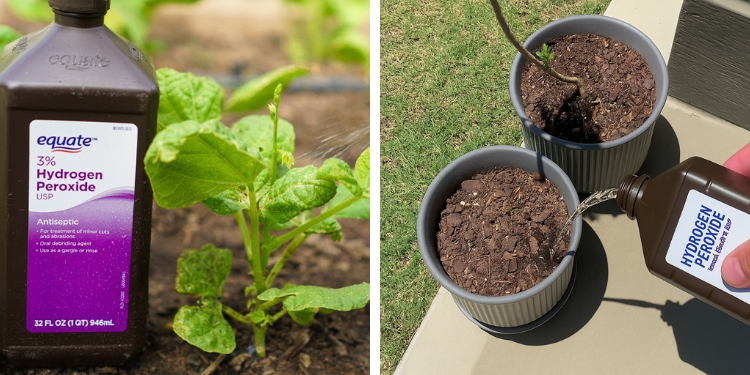
Hydrogen peroxide is more than just a household disinfectant – it’s a gardener’s secret ally.
From reviving struggling roots to fighting off pests and fungi, this simple solution has a wide range of uses in the garden.