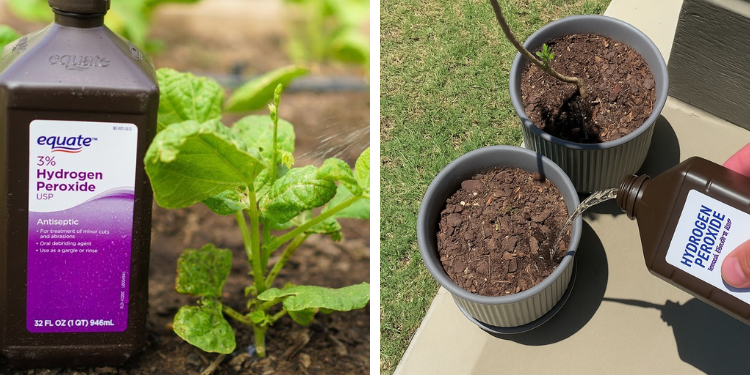
Hydrogen peroxide (H₂O₂) is one of the most surprising yet powerful tools gardeners can use.
Found in nearly every home medicine cabinet, it’s often associated with disinfecting cuts or whitening laundry.
But did you know this simple liquid can also transform your garden?
When diluted properly, hydrogen peroxide can aerate soil, stimulate root growth, prevent fungal infections, control pests, and even revive struggling plants.
Some plants respond particularly well to hydrogen peroxide treatments, while others should be handled with care.
What Is Hydrogen Peroxide?
Hydrogen peroxide is a chemical compound made up of water (H₂O) with an extra oxygen atom (O), forming H₂O₂.
Concentration levels: The most common household hydrogen peroxide is 3%. For gardening, this is diluted further to 1–1.5% or less, depending on the use.
How it works in the garden: When hydrogen peroxide breaks down, it releases oxygen and water. This burst of oxygen enriches soil and roots, suppresses anaerobic pathogens, and stimulates healthy growth.
Unlike harsh chemicals, hydrogen peroxide decomposes quickly and leaves no harmful residue – making it an eco-friendly gardening tool when used correctly.
Benefits of Using Hydrogen Peroxide in the Garden
Hydrogen peroxide is versatile. Here are some of the biggest benefits:
1. Aerates Soil and Stimulates Roots
The extra oxygen molecule improves soil aeration, giving roots more access to oxygen. Plants like vegetables and container-grown flowers benefit from this “oxygen boost,” which encourages stronger root systems.
2. Fights Root Rot and Fungal Diseases
Hydrogen peroxide is antifungal. It helps combat Pythium, Fusarium, and Rhizoctonia—common root rot culprits in overwatered soils.
3. Disinfects Tools and Seeds
It kills harmful bacteria and fungi on garden tools, seed-starting trays, and even seeds before planting, reducing damping-off disease.
4. Acts as a Natural Pest Control
Hydrogen peroxide spray can deter soft-bodied insects like aphids, fungus gnats, and spider mites without resorting to synthetic pesticides.
5. Revives Wilted Plants
A weak solution can revive plants suffering from oxygen-starved roots or compacted soil.
6. Safe and Eco-Friendly
When applied correctly, it decomposes into water and oxygen, leaving no toxic residue behind.
Which Plants Love Hydrogen Peroxide?
Not all plants need hydrogen peroxide, but some particularly thrive when given small, controlled doses.
1. Tomatoes
Why They Love It: Tomatoes are notorious for fungal issues such as blight, root rot, and damping-off in seedlings.
Because hydrogen peroxide releases oxygen into the soil, it prevents the anaerobic conditions fungi love.
It also strengthens the roots of tomatoes, making them more resistant to stress and improving fruit production.
How to Use:
- Mix 1 part 3% hydrogen peroxide with 2 parts water and use as a soil drench around the base every 2–3 weeks.
- For fungal leaf spots, use a foliar spray (1 tablespoon peroxide per 1 cup of water) applied to both sides of the leaves.
Expected Results: Healthier plants with stronger roots, reduced risk of fungal infections, and more vigorous fruiting.
2. Peppers
Why They Love It: Peppers share many growing conditions with tomatoes, and they also benefit from soil oxygenation and fungal control.
Root oxygenation from peroxide promotes bushier plants and heavier yields.
How to Use:
- Drench soil every 2–3 weeks with the same dilution as tomatoes.
- Mist foliage lightly with a foliar spray if you notice mildew or leaf spot.
Expected Results: More productive pepper plants with less susceptibility to root diseases.
3. Roses
Why They Love It: Roses are highly prone to fungal diseases like powdery mildew, black spot, and rust.
Hydrogen peroxide not only kills fungal spores but also keeps the soil around their roots aerated, preventing rot.
How to Use:
- Spray a 1:10 dilution of 3% hydrogen peroxide to water onto leaves weekly as a preventative measure.
- Drench soil lightly around the base if the roots seem waterlogged.
Expected Results: Cleaner foliage with fewer fungal problems, stronger root systems, and longer-lasting blooms.
4. Orchids
Why They Love It: Orchids are sensitive to overwatering and root rot. Their exposed or aerial roots benefit from the oxygen boost hydrogen peroxide provides, and the antifungal properties help prevent infections.
It’s especially useful for reviving stressed orchids.
How to Use:
- Dip cotton balls in diluted hydrogen peroxide (1 teaspoon per cup of water) and dab gently on roots during repotting.
- Mist roots occasionally with a very diluted solution to kill bacteria and fungi.
Expected Results: Orchids recover faster after repotting, develop healthier roots, and produce more blooms.
5. Houseplants
Why They Love It: Indoor plants often suffer from fungus gnats, compacted potting soil, and poor aeration.
Hydrogen peroxide drenches kill larvae in the soil, prevent root rot, and loosen compacted potting mix so roots can breathe.
How to Use:
- Mix 1 part hydrogen peroxide with 3 parts water and drench the soil to kill gnats and freshen roots.
- Mist foliage occasionally to prevent mildew or mold.
Expected Results: Gnats disappear within days, plants perk up, and roots expand into loosened soil.
6. Root Vegetables (Carrots, Beets, Radishes)
Why They Love It: Root crops need loose, oxygen-rich soil to grow straight, healthy roots.
Hydrogen peroxide helps prevent fungal pathogens that cause soft rot and improves soil aeration.
How to Use:
- Before planting, soak seeds in a 3% solution for 10 minutes to kill pathogens and boost germination.
- Apply a weak soil drench (1 teaspoon peroxide per cup of water) every 3–4 weeks.
Expected Results: Straighter, healthier root crops with fewer fungal problems.
7. Seedlings
TO CONTUNUE READING THE ARTICL PLEASE SEE PAGE 2 .