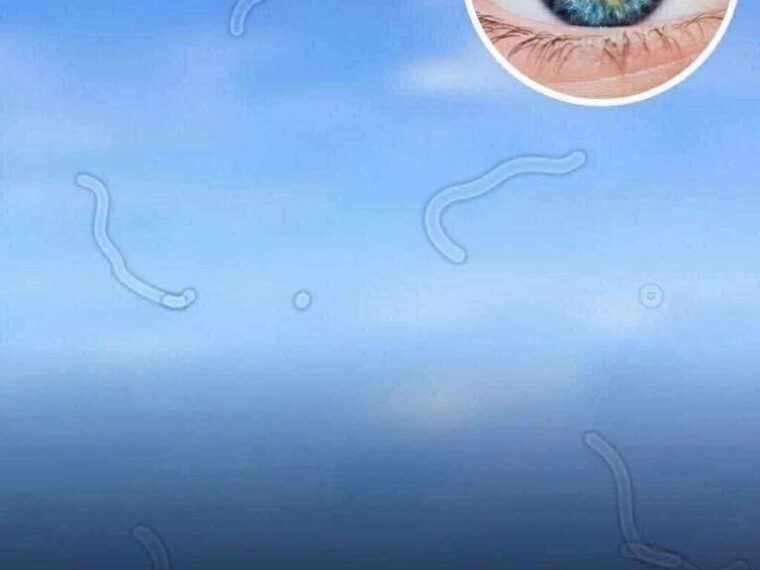
Have you ever noticed tiny squiggles, dots, threads, or shadowy shapes drifting across your vision—especially when you look at the sky or a bright wall? You blink… they move. You try to stare at them… they escape. Congratulations (or not 😄), you’ve met eye floaters.
Let’s break it down in a clear, friendly, and slightly fun way.
🫧 What Exactly Are Eye Floaters?
Eye floaters are tiny clumps or strands inside the vitreous, the gel-like substance that fills the inside of your eye.
As light enters your eye, these tiny clumps cast shadows on the retina, and your brain interprets those shadows as floating shapes.
They can look like:
- Wiggly lines or worms 🪱
- Dots or specks
- Cobwebs
- Transparent circles or threads
They often drift when your eyes move—and frustratingly float away when you try to focus on them.
🧬 Why Do Eye Floaters Appear?
Most of the time, floaters are a normal part of aging, but there are other reasons too:
👴 1. Natural Aging (Most Common)
As you get older, the vitreous gel slowly shrinks and becomes more liquid. Tiny fibers clump together—hello, floaters.
👓 2. Nearsightedness (Myopia)
People who are nearsighted tend to notice floaters earlier and more often.
👁️ 3. Posterior Vitreous Detachment (PVD)
Sounds scary, but it’s often harmless. The vitreous pulls away from the retina as part of aging.
🦠 4. Eye Inflammation or Infection
Inflammation can release debris into the vitreous, creating floaters.
🤕 5. Eye Injury or Surgery
Trauma or procedures (like cataract surgery) may increase floaters.
🩸 6. Bleeding Inside the Eye
Conditions like diabetes or high blood pressure can cause bleeding, leading to sudden floaters.
😌 Are Eye Floaters Dangerous?
Most of the time: NO.
They’re annoying, not harmful.
Your brain is amazing—it often learns to ignore floaters over time, making them less noticeable.
BUT… 🚨 there are important exceptions.
🚨 When Should You See an Eye Doctor Immediately?
TO CONTINUE READING THE ARTICLE PLEASE SEE PAGE 2