If you’ve ever grown lavender, you already know the heartbreak:
It starts off full, bushy, fragrant…
Then one day you look at it and think:
“Why does my lavender look like a tiny tree with sticks for legs?”
Don’t worry — it’s not just you!
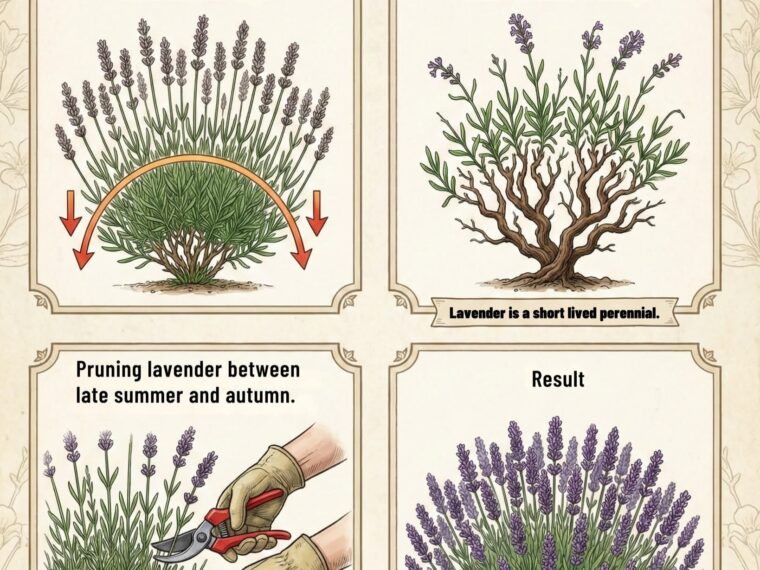
Lavender is a short-lived perennial, and without proper pruning, it becomes woody, leggy, and bare at the base. The good news? With the right pruning method and timing, your lavender can stay round, lush, and beautifully purple for years.
Let’s dive into the science, the technique, and the gardener’s secret behind PERFECT lavender.
🌱 Why Lavender Turns Woody
Lavender naturally grows from the top down. New growth comes from the green, flexible stems — NOT the old, brown, woody base.
If you don’t prune it:
- The plant puts all its energy into flowering
- The old stems get longer and tougher
- The base becomes bare
- The whole plant stretches upward
- Eventually, it collapses or splits open
A neglected lavender plant usually becomes woody within 2–3 seasons.
But with good pruning, you can delay woodiness and keep it productive for up to 10 years or more.
✂️ The Secret Technique: The Dome Shape Prune
Lavender pruning isn’t complicated — but it DOES require confidence.
Here’s the method gardeners swear by:
🔵 1. Imagine a Dome or Half-Sphere
The plant should look like a round cushion by the end of pruning — never tall or top-heavy.
🔵 2. Prune Back One-Third of the Plant
Cut all the flower stems AND the soft green growth.
Leaving:
- A neat rounded shape
- About 2–3 inches (5–7 cm) of green stem above the wood
🔵 3. NEVER Cut Into the Woody Base
Lavender wood won’t regrow.
If you cut into it, the branch often dies.
This is the #1 reason lavender fails after a pruning session.
📅 Best Time to Prune Lavender
TO CONTINUE READING THE ARTICLE PLEASE SEE PAGE 2